Monthly Archives: March 2013
Post
Post
We hear regularly some warnings of scientists on the important rise of the sea level that will occur before the end of the century. The worst scenario usually predicts a rise of less than a meter before 2100. Where does this number come from? Continue reading
Post
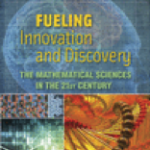
A distinguished panel of experts, gathered by the National Academies, has recently produced a very interesting and informative publication: Fueling Innovation and Discovery: The Mathematical Sciences in the 21st Century. This publication was released by the National Academies in advance of their report The Mathematical Sciences in 2025, developed with support from the National Science Foundation. Continue reading
Post
Assuring a sustainable future for our children and grandchildren is, arguably, the greatest challenge facing humanity and raises a plethora of scientific and mathemat- ical challenges. In the language of the Brundtland Report World Commission on Environment and Development, 1987, it means leaving for future generations the same options we have for how we want to live our lives. However, operationalizing that concept is easier said than done. Continue reading
Post
This morning I heard a lecture by Rick Anthes, president emeritus of UCAR, former director of NCAR. His talk was entitled “Butterflies and Demons,” and the subject was predictability of weather and climate. He was a witness to, and participant in the development of numerical weather prediction in the form it exists today at weather centers worldwide. It was a particularly interesting and provocative talk.
Continue reading
Post
Last Saturday, at the Association for Women in Mathematics (AWM) Research Symposium at Santa Clara University, Inez Fung gave a wonderful spirited lecture on “Climate Math.” Continue reading
Post

I’ve been wondering whether it’s more energy efficient to go out and buy something at a local store or to order it over the internet and have it delivered to my door. Continue reading
Post
In 1941, the Serbian mathematician Milutin Milankovitch (1879–1958) suggested that past glacial cycles might be correlated to cyclical changes in the insolation (the amount of solar energy that reaches Earth from the Sun). Continue reading
Post
The American Physical Society (APS) now has a Topical Group on the Physics of Climate (GPC). Continue reading
Post
For the past nine weeks, I had the privilege to teach a Massive Open Online Course(MOOC) on image and video processing. Continue reading
Post
The first CliMathNet conference will be held on 1st-5th July 2013 in Exeter, UK. Continue reading
Post
This month marks the 50th anniversary of the 1963 publication of Ed Lorenz’s groundbreaking paper, “Deterministic Nonperiodic Flow,” in the Journal of Atmospheric Science. This seminal work, now cited more than 11,000 times, inspired a generation of mathematicians and physicists to embrace the nonlinearity governing our complex world. Continue reading
Post
It took approximately 40 years for the community of mathematicians to become aware of the various difficulties facing human society in the near future and to accept to work on these questions. Continue reading
Post
One of the most famous images in Japanese art is the Great Wave off Kanagawa, a woodblock print by the Japanese artist Hokusai. The print is also famous in mathematics: the structure of the breaking wave at its crest illustrates features of self-similarity, and the large amplitude of the wave has led it to be interpreted as a rogue wave generated from nonlinear wave effects. Continue reading
Post
While the European launch of MPE2013 was taking place at the UNESCO Headquarters in Paris, a youth festival was taking place in Lisbon at “Pavilhão do Conhecimento,” the largest science center in Portugal, with hundred of pupils participating in mathematics popularization activities directly or indirectly related to the mathematics of planet earth for schools. Continue reading
Post
March 11 marks the second anniversary of the 2011 9.0 earthquake with epicenter located off the coast of Japan, which caught the world—including expert seismologists—by surprise. It was a stark reminder of how much is still unknown about faults and their sudden, catastrophic, behavior. Continue reading
Post
Sub-Sahara Africa is the epicenter for both the HIV epidemic and poverty. Continue reading
Post
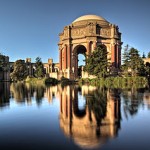 San Francisco - Palace of Fine Arts
On Monday, March 4, Emily Shuckburgh delivered the second of the MPE2013-Simons Public Lecture Series talk, “Climate disruption: what math and science have to say” at the Palace of Fine Arts in San Francisco. Continue reading
Post
In recognition of Mathematics of Planet Earth 2013, the SIAM Journal on Scientific Computing (SISC) has dedicated a special issue to Planet Earth and Big Data. Continue reading
Post
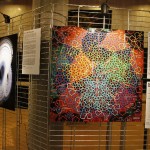
On March 5, at 9:00 am, the first visitors started to explore the 20 modules of the first MPE exhibition at the UNESCO Headquarters in Paris. Continue reading
Post
Twenty-nine entries were submitted for the competition for modules for a virtual exhibition Continue reading
Post
Today, Europe celebrates an exceptional event for mathematics. Our concern today is the exposure to scientists and to society at large of one of the most valuable heritages of human knowledge: mathematics. Continue reading
Post
Les observations mettent en évidence un réchauffement global du climat et une augmentation de la concentration en gaz à effet de serre dans l’atmosphère. Continue reading
Post
Though waves of one sort or another are a ubiquitous part of our daily experience, we have to get on with our lives, and therefore tend not to think of the wavelike nature of daily phenomena. Those fortunate among us who can escape to the shore on a hot August week can then take the time to observe the sea and the waves she sends us. Continue reading
Post

Post
MPE2013 continues to spread among schools, science centers and universities. Many people are enthusiastic and eager to organize MPE activities. But what is an MPE topic?
Continue reading
Post
MPE2013 is a success. It is has generated enthusiasm all over the world, and it is giving mathematics more visibility than we could have hoped for. Continue reading